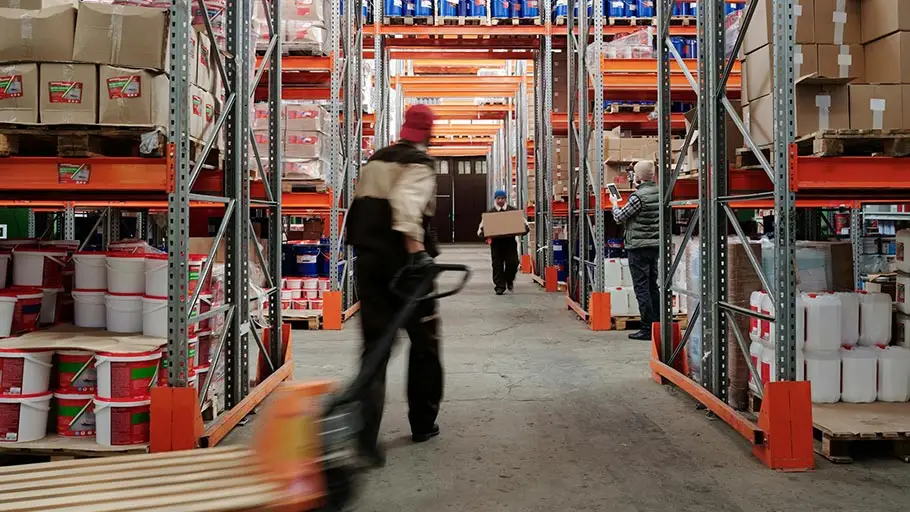
Warehouse safety laws address an environment where workers, powered equipment, heavy loads, storage systems, and delivery vehicles constantly cross paths. Federal OSHA rules form an important part of the U.S. framework, while state plans, building codes, fire rules, and industry-specific requirements may add further duties.
Good warehouse safety therefore depends on both physical equipment and how work is organized.
Racking and Stored Materials Must Stay Stable
Storage systems can become dangerous when racks are damaged, loads exceed capacity, or goods are stacked without adequate stability. OSHA’s warehousing guidance recommends inspecting racking, isolating damaged areas, protecting rack uprights, and keeping stored materials secure.
Operations teams sometimes encounter workplace news resources while researching warehouse topics, but load limits and repair decisions should come from competent technical guidance and applicable safety requirements.
A forklift strike that bends a rack upright should not be dismissed because the rack is still standing. Damage can reduce its ability to support later loads.
Forklift Rules Focus on Operators and Conditions
Powered industrial trucks create hazards for drivers and pedestrians. OSHA states that forklift operators must receive appropriate training, including instruction related to the particular vehicle and workplace conditions. Equipment should also be examined for unsafe conditions before operation.
Employers developing training materials may read operations-focused reading alongside internal procedures, but training should reflect the equipment actually used, traffic patterns, loads, ramps, aisles, and hazards within the facility.
Pedestrian separation is especially important where workers regularly cross forklift travel lanes.
| Warehouse Hazard | Control Focus | Possible Failure |
|---|---|---|
| Storage racks | Stable loads and sound structure | Collapse or falling goods |
| Forklifts | Trained operators and safe travel | Collision or tip-over |
| Loading docks | Edge and trailer protection | Vehicle or worker fall |
| Aisles | Clear travel paths | Collision or blocked access |
Loading Docks Require More Than Warning Paint
Dock edges combine elevation changes with moving trucks, trailers, forklifts, pallet jacks, and pedestrians. OSHA warns that forklift falls from loading docks can be fatal and recommends maintaining safe distances from edges and keeping working surfaces clear.
Warehouses researching warehouse management topics should still build dock procedures around their own traffic flow and equipment.
Dockboards also need attention. OSHA rules covering walking-working surfaces require dockboards to be capable of supporting intended loads and, where applicable, secured against unintended movement.
Worker Protection Extends Beyond Vehicles
Slips, blocked aisles, conveyors, manual handling, falls, battery charging, and falling objects can all create exposure.
OSHA’s warehouse guidance calls for clear passageways, maintained floors, safe material storage, conveyor guarding, appropriate maintenance, and controls around battery charging areas.
The practical lesson is that a warehouse safety program cannot focus only on forklifts. Small housekeeping failures often interact with larger equipment hazards.
Common Safety Assumptions That Fail
One mistake is assuming a skilled forklift driver eliminates forklift risk. Even an experienced operator can encounter a pedestrian appearing from a blind aisle, a damaged pallet, an unstable load, or an unsecured trailer.
Another problem is repairing damaged rack components informally without checking whether the repair restores required capacity. Painting over bent steel does not restore structural strength.
Safety rules also need updating whenever inventory profiles, warehouse layouts, vehicles, or loading practices change.
When to Get Safety or Legal Help
Professional assistance may be appropriate after a serious workplace injury, OSHA inspection, rack collapse, forklift incident, loading-dock fall, citation, or dispute about regulatory obligations.
Safety engineers can assess physical hazards, while employment or OSHA counsel can address enforcement questions and legal responsibilities. Incident evidence, inspection records, training documents, and equipment records should be preserved when a significant event occurs.
Frequently Asked Questions
Does OSHA require forklift training?
Yes. Covered powered-industrial-truck operators must receive training appropriate to the equipment and workplace conditions before operating independently under the applicable OSHA standard.
Are damaged warehouse racks an OSHA issue?
Damaged racking can create falling-material and collapse hazards. The condition should be assessed promptly, and affected areas may need to be isolated until safe use is confirmed.
Who is responsible for loading-dock safety?
Responsibility depends on the hazard and workplace arrangement. Employers generally must protect their workers, while carriers, property operators, contractors, and other parties may have separate contractual or legal duties.
Make Warehouse Safety Operational
Effective warehouse compliance is visible on the floor: trained operators, protected pedestrians, stable racks, clear aisles, controlled dock edges, and equipment that is inspected before problems become incidents.
Policies matter, but they must match what workers actually encounter during a normal shift.
This article provides general legal information and is not a substitute for professional legal or workplace-safety advice.